Use your day-to-day interactions to positively impact the quality of life of those around you.
What is MECC?
MECC is using everyday conversations, to check-in with people, see what’s on their mind and help them think their issues through.
It’s not about being an expert or telling people how to live their lives; it’s about recognising and creating opportunities to connect through strong conversational skills in your day-to-day life.
Conversations can help people explore an issue, identify barriers, and develop practical solutions that support behavioural change and help prevent long-term illness. A helpful tool to keep in mind is ‘Ask, Assist, Act’.
Start the conversation.
Listen, show understanding and assess how you might help.
ASK
Share or find reliable information.
Help the person set tailored and appropriate goals.
ASSIST
Signpost or refer for further support.
Encourage self-care, connect to services and clarify next steps.
Many of the long-term conditions affecting our population are strongly linked to well-established behavioural risk factors. In the UK, 40% of disability-adjusted life years lost are attributable to tobacco use, hypertension, alcohol consumption, excess weight, or physical inactivity.
These are conversations we already tend to have in our daily lives – we all know them:
Quit Smoking
Eating Healthy
Drinking Less
Move More
Mentally Healthy
We have these conversations everywhere. At home with family, in cafés with strangers, on the phone with friends, and at work with colleagues or clients.
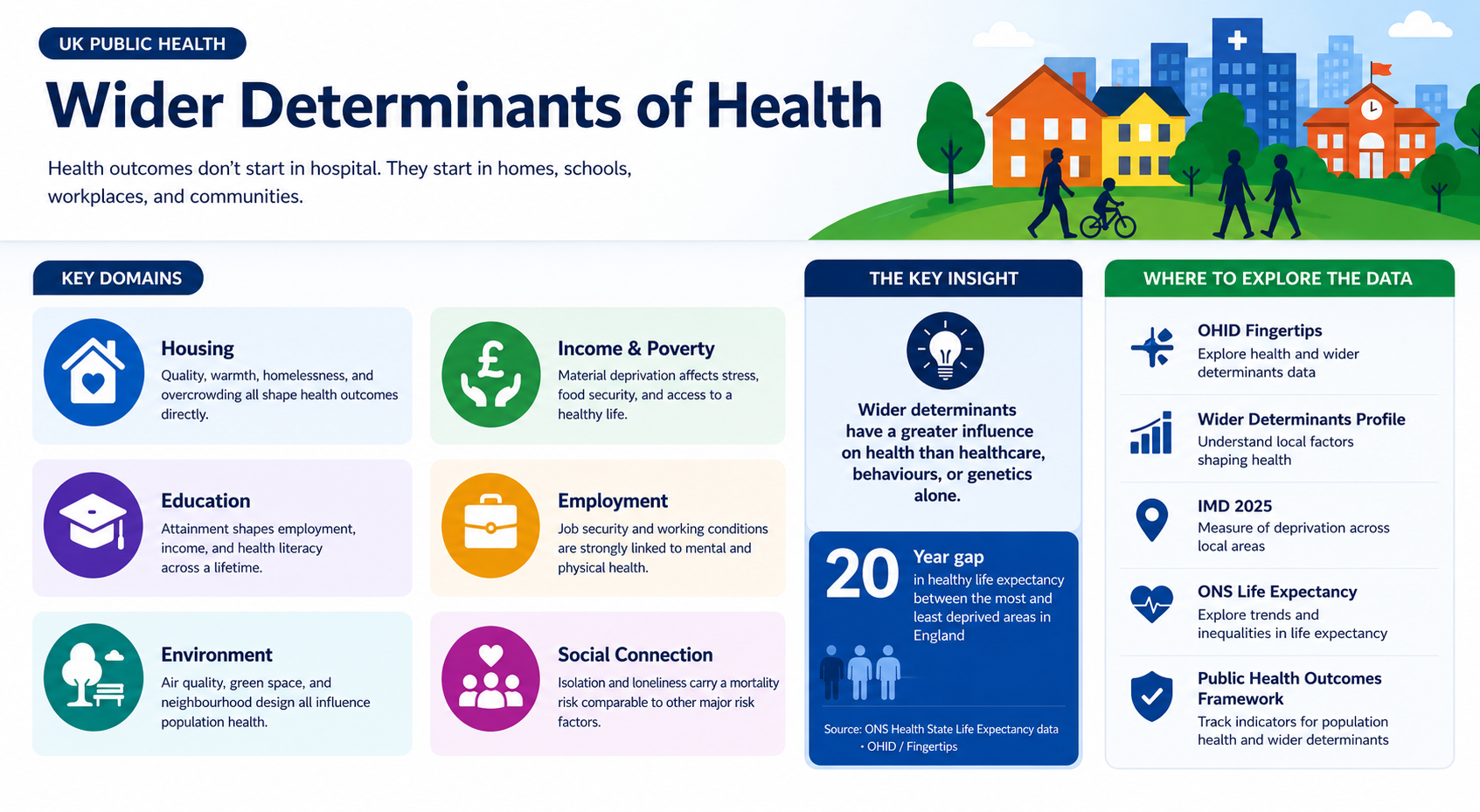
What enhances these conversations are knowledge about the issues affecting people. This is called the ‘Wider Determinants of Health’ which are the diverse social, economic, and environmental factors (such as housing, education, work, and community) that shape physical and mental wellbeing.
Person-centred conversations should always include the wider determinants of health.